
Solar System (On-Grid & Off-Grid)
A rooftop solar system generates electricity using solar panels installed on the roof of your home, shop, or factory. It helps reduce electricity bills and supports clean energy.
🔹 1️⃣ On-Grid Solar System (Grid-Tied)
An On-Grid system is connected to the electricity board (DISCOM).
⚙️ How It Works:
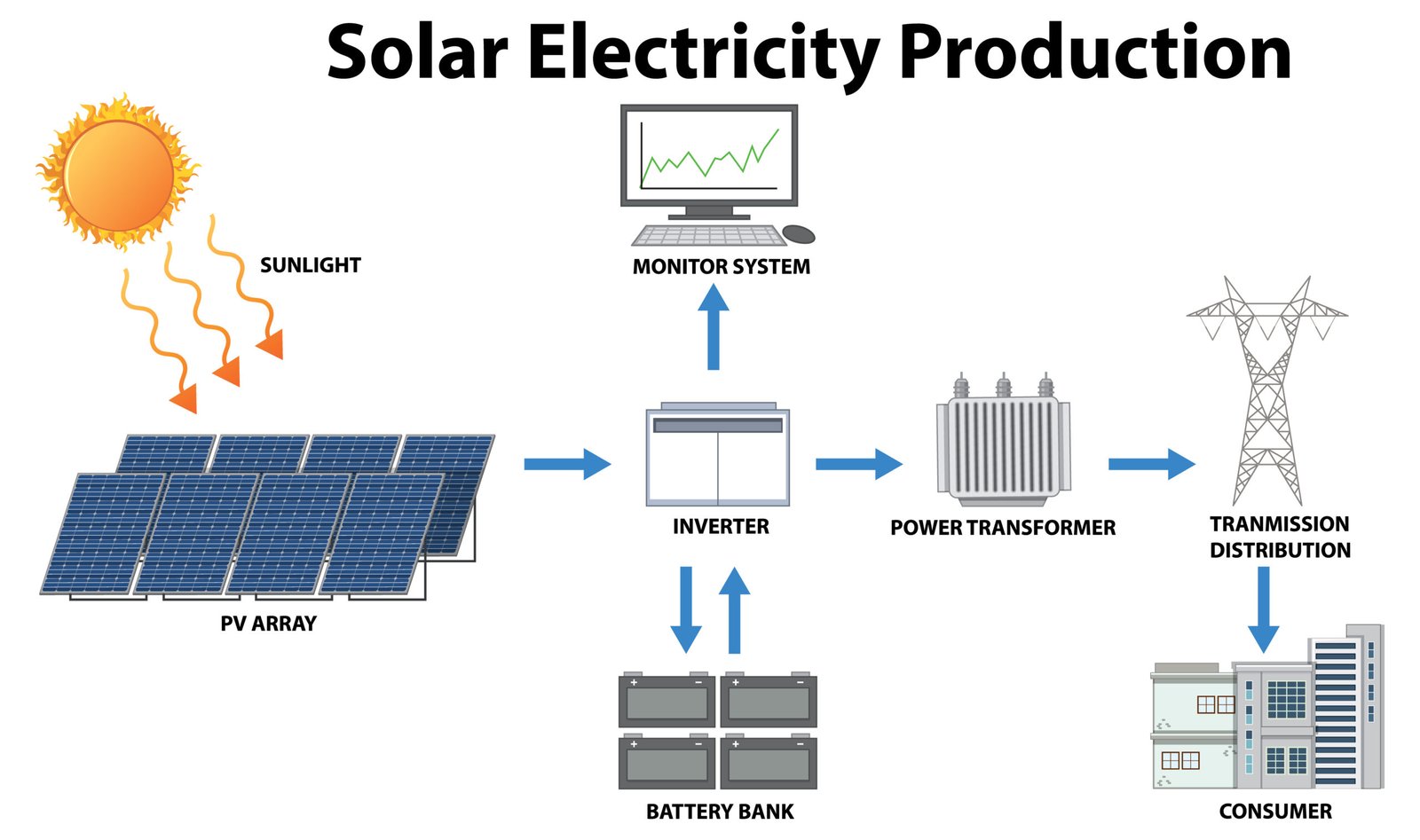
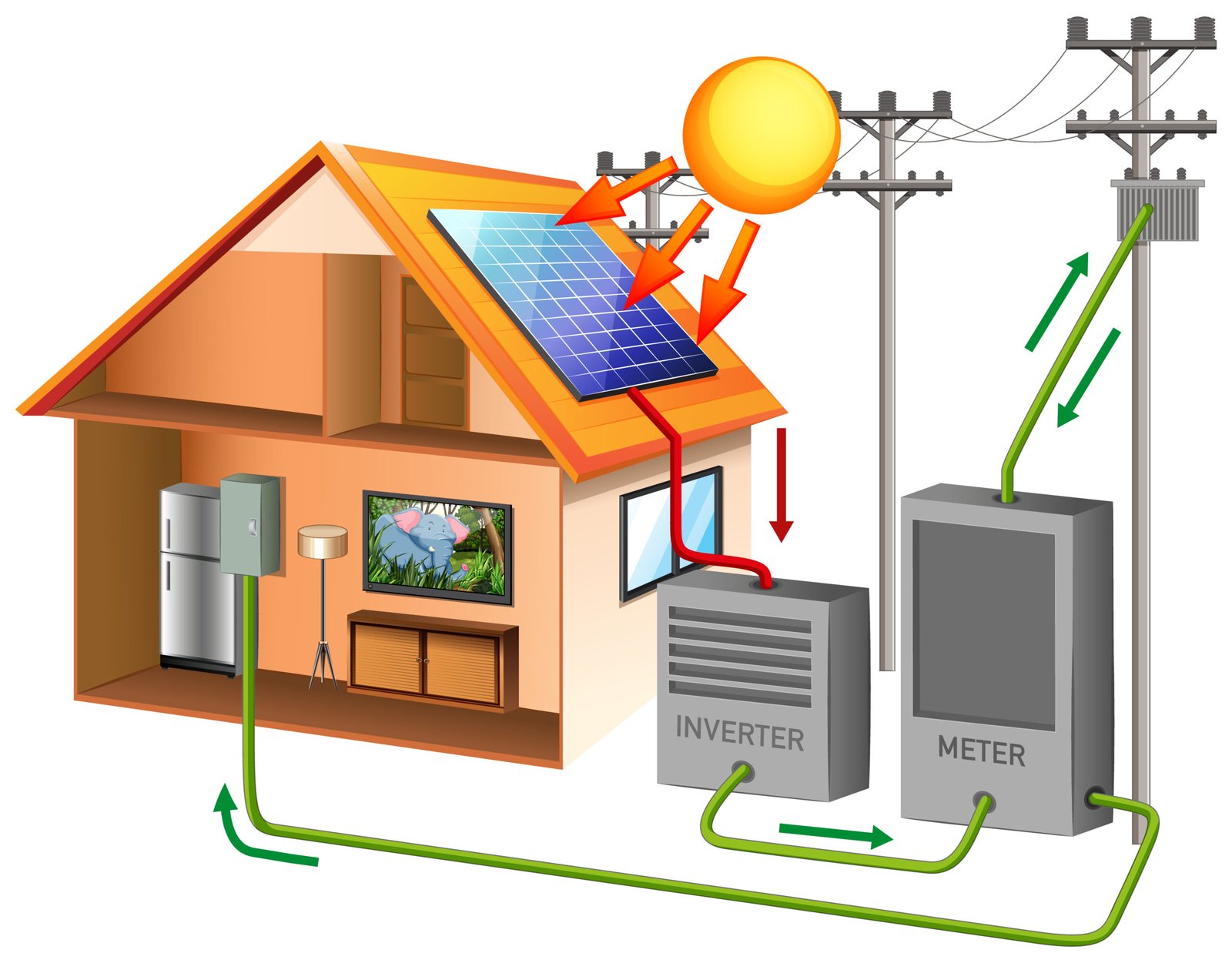
Solar panels generate electricity during the day.
Power is used directly in your home/building.
Extra power is sent to the grid through Net Metering.
At night, electricity is taken from the grid.
🧰 Main Components:
Solar Panels
Solar Inverter (On-grid inverter)
Net Meter
Mounting Structure
AC/DC wiring
✅ Advantages:
Lower cost (no batteries required)
Low maintenance
Reduce electricity bill
Net metering benefit
❌ Disadvantages:
No backup during power cut
Depends on grid availability
✔️ Best For:
Cities with stable electricity supply
Residential & commercial buildings
🔹 1️⃣ On-Grid Solar System (Grid-Tied)
An On-Grid system is connected to the electricity board (DISCOM).
⚙️ How It Works:
Solar panels generate electricity during the day.
Power is used directly in your home/building.
Extra power is sent to the grid through Net Metering.
At night, electricity is taken from the grid.
🧰 Main Components:
Solar Panels
Solar Inverter (On-grid inverter)
Net Meter
Mounting Structure
AC/DC wiring
✅ Advantages:
Lower cost (no batteries required)
Low maintenance
Reduce electricity bill
Net metering benefit
❌ Disadvantages:
No backup during power cut
Depends on grid availability
✔️ Best For:
Cities with stable electricity supply
Residential & commercial buildings
🔹 3️⃣ Hybrid Solar System (On + Off Grid)
A Hybrid system combines both on-grid and battery backup features.
✔️ Benefits:
Net metering + battery backup
Best for areas with power cuts
Smart energy management